
Regenerative injections for orthopedic, wound, and pain care
Offered in person near Bradenton and Ellenton, Florida. We evaluate whether you are a candidate and put the full cost in writing before you decide anything.
Important information about these therapies
- These stem cell therapies have not yet been approved by the U.S. Food and Drug Administration.
- You are encouraged to consult with your primary care provider before undergoing stem cell therapy.
- Individual results vary. Nothing on this page is a promise or guarantee of any particular outcome.
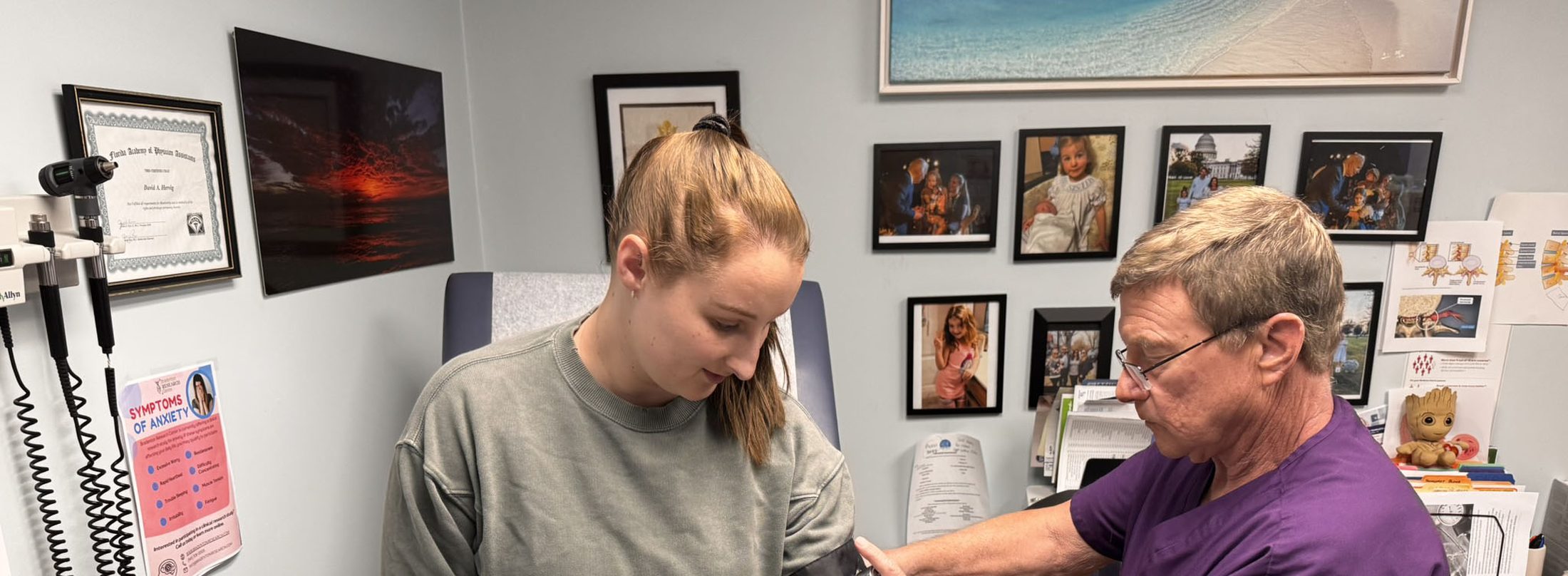
- Photographs on this site are illustrative. The individuals shown are models, not actual patients.
Orthopedics
Joint, tendon, and soft tissue concerns. We review your imaging first, and say so when a conventional route is the better option.
Wound care
Slow-healing and chronic wounds, assessed alongside standard treatment rather than in place of it.
Pain management
Persistent musculoskeletal pain, once conservative measures have been tried. We stay candid about what is realistic.
What this therapy is, and what it is not
Cellular products introduced at or near the site of injury, with the goal of supporting the body's own repair processes. It is not approved by the FDA for these uses, not a substitute for standard medical or surgical care, and not appropriate for everyone. If your evaluation suggests you are unlikely to benefit, we will say so rather than sell you a treatment.
Get startedWhat we consider, and what we do not treat
Stem cell therapy is offered only within the three areas Florida permits for therapies not approved by the FDA. Common reasons patients ask about it:
- Knee, hip & shoulder joint pain
- Tendon & soft tissue injury
- Chronic musculoskeletal pain
- Slow-healing & chronic wounds
- Post-injury recovery support
- Osteoarthritis-related joint pain
We do not offer stem cell therapy for neurological, autoimmune, cardiac, pulmonary, or developmental conditions, and we do not offer it as an anti-aging or longevity treatment. Anyone claiming stem cells can cure conditions such as Parkinson's disease, Multiple Sclerosis, or autism is not describing treatment we provide or endorse. These therapies are not approved by the FDA, individual results vary, and no outcome is guaranteed.
Where the cellular products come from
Florida sets strict limits on the sourcing and handling of cellular products, and we hold to them. Sourcing details for your specific treatment are disclosed to you in writing during the informed consent process, before anything is scheduled.
Permitted sourcing
Tissue never used
Viability testing
Questions about a specific product
The risks, stated plainly
Every injection-based therapy carries risk, and an unapproved therapy deserves a more careful conversation, not a glossier one. The risks that apply to your specific situation are reviewed with you during informed consent, but the general picture belongs on this page, not behind a consultation.
Known risks of injection procedures
The possibility it does not help
What the consent document covers
Your right to slow down
The terms you will hear, defined honestly
Regenerative medicine marketing leans on technical terms that sound more settled than they are. Here is what the common ones actually mean, so you can evaluate any clinic's claims, including ours.
Stem cells and MSCs
Minimal manipulation and homologous use
What "not FDA approved" means here
Questions worth asking any clinic
Who evaluates and treats you
Your injection is performed by David Hervig, PA-C, a Physician Assistant with over 34 years of experience and 12 years of service in the U.S. Army. Eric Folkens, MD serves as supervising physician for this service. Dr. Folkens is board certified in family medicine by the American Board of Family Medicine.
Verifying our licenses
Level of physician oversight
Independent health care information

How treatment is decided
In-person evaluation
We review your history, imaging, prior treatments, and goals in person. Some patients leave this visit with a recommendation against stem cell therapy, and that is a legitimate outcome of an honest evaluation.
Written cost estimate and informed consent
You receive a good faith estimate of anticipated charges in writing, along with a detailed consent form covering risks, alternatives, anticipated results, the lack of FDA approval, and the source of the tissue. You are encouraged to discuss it with your primary care provider before signing.
Treatment and follow-up
If you choose to proceed, the injection is performed in person near Bradenton or Ellenton. We schedule follow-up to track your response honestly, including when the result is not what either of us hoped for.
Let’s build your plan
In-person evaluation and treatment near Bradenton and Ellenton, Florida. Cash pay, with your full cost estimate in writing before you decide.
FAQ
More questions? Contact us.
Is stem cell therapy approved by the FDA?
No. The stem cell therapies offered here have not yet been approved by the U.S. Food and Drug Administration for these uses. Florida permits licensed practice of these therapies within orthopedics, wound care, and pain management, with written informed consent. You are encouraged to consult your primary care provider before undergoing treatment.
What does it cost?
Cost depends on the treatment area, the product used, and the number of injections, and we disclose those variables before quoting you. Because we are a cash pay practice, you receive a written good faith estimate of anticipated charges automatically when you schedule, and within three business days if you simply ask for one. If you ever overpay, the overpayment is refunded within 30 days of us determining it was made.
Do you guarantee results?
No, and you should be skeptical of any clinic that does. Individual results vary. We can tell you what the evaluation shows and what is realistic for your situation, but we do not promise outcomes, and we will tell you when we think you are unlikely to benefit.
Who is not a good candidate?
That is decided at the in-person evaluation, based on your history, imaging, and the specific problem you want addressed. Some patients are advised against stem cell therapy, whether because the evaluation suggests they are unlikely to benefit, because a conventional treatment is the better option, or because their condition falls outside the orthopedic, wound care, and pain management scope we practice within. A recommendation against treatment is a normal outcome here, not a failure of the visit.
What is treatment day like?
The injection itself is performed in person and the visit is typically brief. Aftercare instructions, activity guidance, and what to watch for afterward are covered with you at the visit and in writing, because they depend on the treatment area and your situation.
What does follow-up look like?
Follow-up visits are scheduled after treatment so your response can be tracked over the following weeks by the same care team. Your response is documented honestly, including when it is not what either of us hoped for, and anything resembling an adverse event is taken seriously and reported through the proper channels.
Are exosomes the same as stem cells?
No. Exosomes are tiny vesicles released by cells; they are not cells and they are not stem cell therapy. This page describes stem cell therapy only. Whatever product is proposed for you is identified specifically, in writing, during the informed consent process, so you always know exactly what you are receiving.
Do I have to come in person?
Yes. Unlike most of our services, stem cell therapy requires in-person evaluation and in-person treatment. It is available to patients who can travel to the Bradenton or Ellenton, Florida area.